
Roofing for Mountain Homes in Northeast Georgia
Roofing Contractor Serving Rabun County, Georgia
Homes throughout Rabun County face roofing conditions that are different from many other parts of Georgia. Steep rooflines, heavy tree coverage, frequent rain, strong winds, and seasonal temperature changes can place added stress on shingles, flashing, ventilation, and drainage systems.
Storm Damage Roofing in Rabun County
Roofing Help for Mountain Weather and Wooded Properties
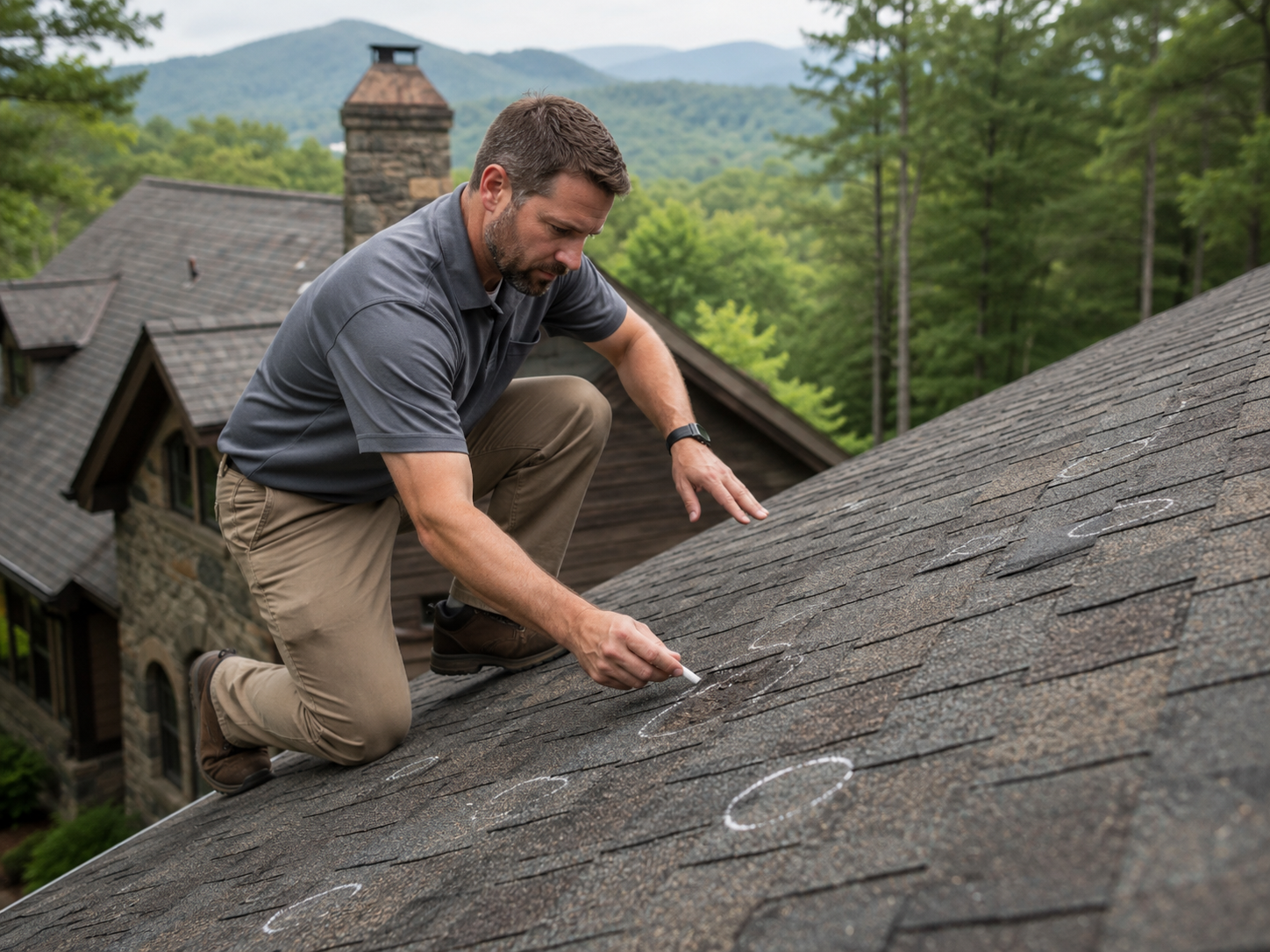
Rabun County homes can be exposed to heavy rain, strong winds, falling limbs, and fast-changing mountain weather. On steep or heavily wooded properties, storm damage may affect shingles, flashing, valleys, gutters, vents, and other vulnerable roof areas without creating an immediate leak.
Caldwell Exteriors provides detailed storm-damage inspections designed to identify visible roofing concerns and document the condition of the property. Our team checks the roofing system from multiple angles, photographs affected areas, and explains whether the damage appears suitable for repair, continued monitoring, or full replacement.
See Our Roofing Process
Roof Inspections and Replacements in Rabun County
See how Caldwell Exteriors evaluates and restores roofing systems across Rabun County. Our videos show the full process—from detailed inspections and storm-damage documentation to material delivery, installation, cleanup, and the completed roof.
Helpful Answers for Rabun County Homeowners
Roofing Questions for Mountain and Wooded Properties
Roofing projects in Rabun County often involve steep slopes, heavy tree coverage, frequent rain, and drainage concerns that are different from flatter suburban properties. These answers explain what homeowners should know before scheduling an inspection, repair, or roof replacement. The current page still uses Duluth wording in this section, so it should be fully rewritten for Rabun County.
Testimonials
What Our Customers Say About Us




Get a Clear Plan for Your Rabun County Roof
Roofing problems on mountain and wooded properties can be difficult to spot from the ground. Steep slopes, heavy rain, falling branches, and debris buildup can all create damage that worsens over time when it is left unaddressed.